Like Mother Like Daughter: The Art of the Zeal

OLYMPUS DIGITAL CAMERA

New year’s eve, 2010: It was when she put his hat on to start her song that his jaw dropped. That was the night her old family friend professed his undying love for her and proposed marriage (she politely declined). That was the night that I knew *JC could still “knock ‘em dead.”

Nothing could squelch her spunk. When her parents divorced, the independent little girl would cheerfully bloom wherever she was planted; whether it was with her eccentric aunt or her doting grandmother. Her childhood stories always entertain: riding on the running board of her dad’s car, collecting eggs from the chickens, playing cowboys and Indians with the three dogs, trying every one of the 24 ice cream flavors at Thompkins.

The night she met the handsome Latin from Manhattan (my dad), they had both decided to go out alone for a change, bored with the same old places their friends would usually dance. They both headed to Roseland, a top club of the day. She had inherited her moxie from her mom, whose advice she would remember when heading home back to New Jersey late at night: always walk near the street, not the buildings.

Their dance lasted 53 years, unfortunately interrupted by his cancer. In between, she rode the ups and downs of all his dreams and schemes as if on a bucking bronco, holding on and never willing to let go. At 5 feet 6 inches tall, my dad made up for his stature by living life large, always cognizant of his humble beginnings. Four children later and with a construction company of his own, our lives were still filled with the spontaneity of their youth; food and music always seemed to evolve into a party.

She remembered everything he had told her. His business acumen had rubbed off on JC and she was much more savvy than she was given credit for. This would come in handy as she maneuvered through life without him.

I can’t remember when she wasn’t the yin to my yang. Even though we were both born under the sign of Cancer, our personalities differ. It’s a symbiotic bond: I keep her organized and on track and she helps me loosen up and go with the flow. She always sees the glass as half full. I do too, but… Is it the proper glass to serve in? Is it clean? Do we have enough for company?

JC has put up with a lot from me through the years, softening the hard edges of my Type A personality, as only a mother can do. I can honestly say that if it weren’t for her, I would not be the person I am today. My style (If you’ve got it, flaunt it), my sense of humor (when you are feeling down, sing “Who Put the Overalls in Mrs. Murphy’s Chowder”) and my medical knowledge (drink water backward to get rid of the hiccups) are all thanks to JC.

How does she do it? I still am learning from her every day. There is something about living with a curiosity for life, with a spirit that renders you ageless, with that “…Fiddle Dee Dee, I’ll think about it tomorrow…” attitude that Scarlet O’Hara had in “Gone with the Wind,” with a continual excitement over even the smallest aspects in life that are contagious.

Helping each other steer through any obstacles, “JC and Me” is a force to reckon with. We have been known to outwit an unsuspecting opponent in zany situations (a la “I Love Lucy”). What would Lucy have been without Ethel? What would I be without JC?


*Who’s who? See “Cast of Characters” on the “About” page.


Retired and Rewired: The 5 Stages of Retirement

Adventure beckoned. After living in Chicago for 23 years, we made the decision to retire early and move to a new city. Plans were set in motion and rapidly took on a life of their own. Many Excel spreadsheets later, we realized that devising a strategy in preparation for this undertaking made all the difference.

From our experiences, here are the five stages of the retirement process:

1. The Analytical Stage- aka the dream and scheme stage: Could we? Should we? Where? When? How?

Start at the beginning
List all the attributes that you are looking for in a new city. Any city that did not meet our criteria was removed from our list:

  • No harsh winter weather
  • A city with an active downtown and a great vibe
  • Ease of airport travel
  • Lower cost of living

Check out the weather
Research the weather, then plan a trip to visit your chosen cities in summer and winter. We traveled in July and checked out the summer weather of our finalists. If the city passed muster, we planned a second trip in the winter months.

2. The Physical and Emotional Stage- aka the cry, why and say goodbye stage

Downsize!
It was time for a serious de-cluttering. This was a huge project, but we tackled it in stages. Once we experienced the benefits of being “lean and mean,” we knew we would never regress.

Rent first
Be smart, slow down and decide what will work for you in the long run. Renting allows you the freedom to leisurely get your bearings and explore different neighborhood options before settling down.

Plan your exit strategy
Our to-do list included putting our condo up for sale, job resignations, contacting friends, family and business associates, planning goodbye dinners, change of address notifications, planning for the move, initiating services in our new home, etc.

3. The spring break Stage- aka the Yahoo! stage

We found ourselves in a new, exciting city and we were free: no alarm clock, no responsibilities! We don’t know what came over us; we ate too much, drank too much, stayed up too late and smiled when we’d pass the Tylenol to each other in the mornings.

4. The Settling in Stage- aka the where are we? Stage

Fitting in
Recreating our daily lives took time and research. In the end, we were pleased with our choices of new doctors, dentist, hair salon, grocery store, church, etc. Next: volunteering, joining a group and taking classes will help us to meet people and connect to the pulse of our new city.

Two peas in a pod?
We were not used to seeing each other every second of the day. We soon settled into a rhythm; we would spend mornings on our own, then at lunch, we would plan the rest of the day.

5. The Search for Adventure Stage- aka the sustainable version of the spring break Stage

Now that we’re here, what should we do? We chronicled all the restaurants and events that we do not want to miss out on and noted near-by destinations that would make for great road trips.

It’s been eight months since we moved to Austin, Texas. We enrolled in Spanish classes at the University of Texas. I found free yoga classes and a free neighborhood pool. We volunteered at the “Keep Austin Weird” Festival. We now know how to do the Texas Two-Step. We played Chicken S*** Bingo and won! After walking the Camino, we joined the Austin chapter of the American Pilgrims. I started this blog. Oh, and Tylenol intake has decreased considerably.


Success is the Best Revenge

Jealousy, anger, resentment; these are all feelings that are sometimes hard to suppress. If we let them, they will take over our lives and darken our spirit. Rather than succumbing to these negative powers, why not use them to your advantage and retaliate in a positive way?

Get angry and get going! Harness all those undesirable emotions. Sit quietly and review the reasons behind these pent-up feelings; writing them down helps to clarify them. Now, close your eyes and see yourself packaging them all up into a new burst of energy.

Let this force guide you and motivate you with a new vitality you never knew you had. See yourself smiling as you envision the person or thing that annoyed you into action and thank them. Without that irritating nudge, you may not have changed the course of your life or made a decision that has benefited you, long after the resentment has faded.

Laptop-less, Yet Dressed for Success; an Exercise in Positive Thinking

What’s next? I was daydreaming with the TV on. What would my next career be? Just then, I noticed a segment about a woman who had moved to Europe and started her own business. There she was, working on her laptop, outside in the town plaza and it hit me; that’s what I want to do!

I want to work on my own, just me and my laptop; no store front and no employees. I want to set my own hours and be able to work from anywhere. But, how? When? Where? I had no laptop and no vision of what I would do, but I decided that I would not let doubt creep in and ruin my excitement.

Now that I had something to focus on, I could start practicing positive thinking. I made up a mantra that I said every morning when I woke up. Every night, just before I fell asleep, I envisioned myself working outside on my laptop every day, successful and happy, noting every detail as if I were in a movie. I had set the stage and would let my subconscious take care of the rest.

One day, while flipping through the newspaper, I noticed they were advertising a blog class for beginners. That was it! I signed up for the class right away and got the last spot. Only one slight problem: it said to bring a laptop and I didn’t have one. I borrowed one for the evening, but what about going forward? The laptop was an integral part of my plan. It represented the freedom to move about. No time to be pessimistic now, I just kept practicing my positive thinking.

The class inspired me and gave me the fundamentals that I needed. I started making notes and getting excited. Even though I was not looking for any investors, I decided to take the time to write a business plan in order to map out my strategy (after all, ultimately this was to be a money-making proposition). I had never written one before, so I gathered a couple of “how to” articles and went to work. The exercise was invigorating. The fact that I still did not have a laptop and did not really want to spend the money for one right now did not deter me. I just kept on with my positive thinking.

Then, one day out of the blue, Mr. Wiz* came home from work and excitedly told me about a new sales contest that his employer had announced. Each salesperson would receive a percentage of their sales for the next two months that could be used at an upcoming auction. To further spur them on, salespeople were asked to turn in a list of items that they and their families wanted, for inclusion in the auction.

We researched laptops and Mr. Wiz turned in the information. I was counting the days until the auction. What Mr. Wiz had not told me until the evening of the event was that he had the highest sales for the time period. When I left the event that evening, new laptop under my arm, I felt as if I were in a dream. Then I realized that I was; a dream of my own making.

Since then, we retired early and moved to Austin, Texas. It took a while to get settled, but now here I am, sitting on my patio every morning, typing on my laptop and writing for my new blog. What’s next?


*Who’s who? See “Cast of Characters” on the “About” page.


Porto, Portugal: Oct. 22-25, 2016

Image

Photo Porto 2

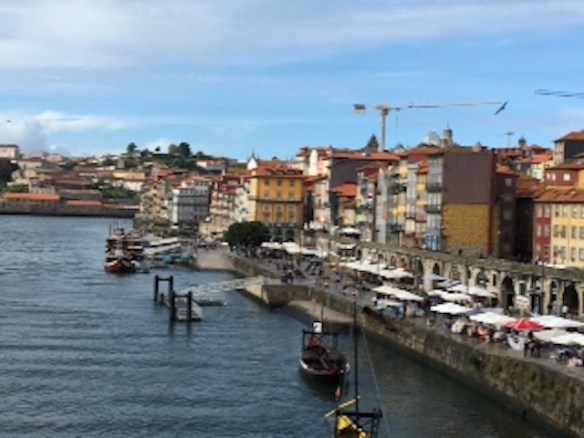
View from the Duoro riverbank

The Pilgrims do not seem to want to go home. Most are leaving Santiago and heading out in all directions. We are going to Porto by bus to meet up with JC* and Big A* and are anxious for our reunion.

Porto is one the oldest cities in Europe and a UNESCO World Heritage Site. It’s location on the Douro River and its hilly streets (more days of inclines and descents!) make it an interesting city to explore.

We travel well together. Big A and I are armed with all the research we’ve done. I especially like the New York Times 36 hour city guide that Big A has provided. Oh, and he surprises us by being able to speak just enough Portuguese to get by (says it’s very similar to Spanish, so he brushed up using the free Duo Lingo app.). Mr. Wiz* is in charge of getting us where we want to go and JC provides the spunk and enthusiasm (she is first one up and ready each day).

You can always count on the NH Hotels for a trendy vibe and the NH Collection Porto Batalha delivers. I particularly like the ancient stone arches that grace the modern lobby and the old postage stamp theme in the elevators and on the carpeting. On arrival, we are given coupons for a port wine tasting in the bar. This will be the start of a wonderful relationship between us, the bar and the port, every night after dinner.

Those inclines and descents really help us work up an appetite and we foodies can’t decide what we like the best: bacalhau (salted codfish), grilled pulpo (octopus), cabrito (baby kid), suckling pig or Portuguese sausages. One of the more interesting meals was lunch at Pastel De Bacalhau. There was only one item on the menu: a large, egg shaped codfish fritter stuffed with cheese served in a plastic holder inset into what looked like an artist’s palette with room for your glass of white port and your thumb, so you could carry it all with one hand.

We stroll the narrow cobblestone streets of the Ribeira District, the old quarter on the Duoro riverbanks, the beautiful gardens at the Palacio de Cristal and the Avenida dos Aliado, a lively avenue. We visit the Livaria Lello & Irmao Library, named the most beautiful bookstore in the world and rumored to be the inspiration for J.K. Rowling’s Harry Potter series. At the Do Porto Cathedral, we delight in the story that a local resident painted the altar to hide its silver, so that when Napoleon and his troops entered the city to pillage it, they left it behind never realizing it was there.

Before we know it, it’s time to head to Lisbon by train.

*Who’s who? See “Cast of Characters” on the “About” page.

Five Life Lessons in 500 Miles: What the Camino Taught Me

Image


Photo Cruz 2

This year, I walked 500 miles through Spain and became a Peregrino, (a pilgrim). I, like the more than 250,000 people from all over the world that are drawn there each year, walked (or biked) to the Shrine of the Apostle Saint James in northern Spain’s medieval city of Santiago de Compostela. The routes, known as “caminos” or ways, originate all over Europe. We traveled the same paths as those did thousands of years before us for the same reasons (spiritual, mental, physical) and with little change.

It is said that “the Camino provides.” One of its gifts was the simplicity of each day. As you trekked through each small town, you were reminded of the beauty of an uncomplicated life. After 33 days of being “unplugged” from the usual stimuli of our daily lives, my minds was clear and open, a freedom seldom experienced.

Whether I was enjoying the camaraderie of other pilgrims or the solitude of walking alone, my days were filled with time for sharing thoughts with others or with myself. I returned home with the unexpected souvenirs of some lessons learned and a new way to live life: 

  1. Focus on one step at a time: Rather than waking up each day and thinking of the 12 – 20 miles of inclines and descents ahead, it was important to concentrate on your footing. Likewise, giving my attention to smaller goals rather than the big picture, will keep me on track and not leave me feeling overwhelmed.
  2. Listen more: I was so captivated by the life stories of the other pilgrims that I found myself listening, really listening to what they had to say. In the quiet moments, I paid more attention to the sounds of nature. I was even more attuned to what I was thinking and feeling. Now, when I have the inclination to interrupt in order to get a word in, rush through a day or disregard myself, I will instead try to remember to savor the moment.
  3. Go with the flow: A day of torrential downpours, a missed turn, dirty clothes and a broken washer and dryer; the day’s trials were nothing that a laugh over a glass of wine with some other pilgrims couldn’t fix. I have trouble “winging it” and always prefer the flow to be pre-planned. I now realize that I need to loosen up and enjoy the ride.
  4. Be open: This was an amazing opportunity to meet people from all over the world and realize that even though they may look, speak or act differently, we basically are all the same. Rather than shying away from those that are different from I am, I will make an effort to be more receptive and try to let my curiosity lead the way to new experiences.
  5. Be grateful: Living so simply for a month, slowing down and watching the small details of life go by opened my eyes to what really matters: health, happiness, family and friends. I will remember to start each day being thankful for what I have, work at giving back in some way and try to cling to as much simplicity as I can.


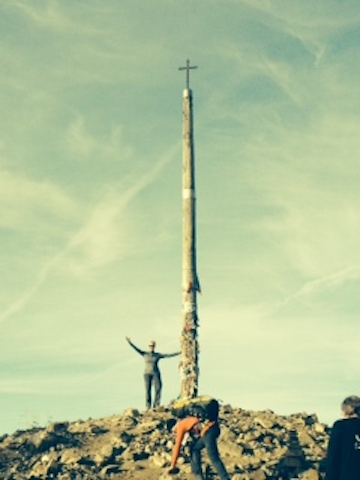
Pictured: The Cruz de Farro (Iron Cross) near Rabanal
Pilgrims bring a stone from home and carry it on their journey to symbolize the spiritual, mental and physical aspects of their lives that are weighing them down. When you leave the stone behind, it is said you are ridding yourself of these burdens.


How to Huff and Puff and Blow Your Stress Away

Contrary to popular opinion, the big bad wolf was a soft-spoken yoga enthusiast with laser sharp focus. Unfortunately, for the three little pigs, his focus was on them. Nevertheless, there is something to all that huffing and puffing. Breathing in until your nostrils stick together, then blowing the air out with all the force you can muster not only gives you a powerful feeling, it may also knock down a house made of sticks. Breathing is the essence of yoga and is believed to control your body, mind and emotions.

The American Institute of Stress suggests that instead of zoning out in front of the TV, the best way to combat the damaging effects of stress is to practice breathing deeply. It elevates your heart rate, forces your lungs to take in more oxygen and helps you to expel more carbon dioxide. In some cases, deep breathing exercises are able to be substituted for conventional medical treatment of stress-related disorders. Giving your heart a good workout cannot only change how you feel, but how you look. Keeping stress at bay can make you look and feel years younger.

Why not give it a try; what have you got to lose? The next time you have too much on your mind, something keeps nagging at you, you don’t get enough sleep or you can’t seem to focus- try huffing and puffing. You will feel an instant release. Plan to work it into your daily schedule for a few minutes a day with a goal of 15 minutes. No time? Try multi tasking; I like to do it while I am exercising.

Deep breathing is effective for any age, it’s free and you can practice it anywhere. Since the way you breathe affects your whole body, it’s a formidable way to change your life. Who knows? Had the three little pigs taken the time to clear away their mental cobwebs and de-stress, would they have been back in the real estate market researching mortgage options?


The Camino: Oct. 17 – 21, 2016

                                                 photo-parador

Oct. 17- Palas de Rey: 16 miles, six hours

The path is nothing but mud and it’s drizzling. I’m sweating in my rain jacket and trudging along. A fellow pilgrim, a lovely older woman traveling alone catches up to me and with a sparkle in her eyes, says “What a beautiful morning! I love the mist. It changes the entire perspective of the landscape.” As I’m listening to her, I unzip my jacket, pull down my hood and the light drizzle instantly cools me off. By the time she goes on her way, I’m feeling great and the rain has already stopped.

We’re up and down again, walking right through farms and past lovely old stone farm houses, catching a glimpse of daily life: an old woman humming to herself as she hangs laundry; a farmer out in the pasture tending his sheep; a woman picking raspberries who stops to offer us some; the cows lazily grazing in the fields; the dogs sleeping in the sun. I find I have acquired a new skill and though it may not be resumé material, it’s interesting to note: I am now able to differentiate an animal’s manure by its smell.

I laugh to myself as I coin a new phrase: “In Spain, what goes up, must come UP”! Walking in the forest always seems a bit mystical, especially the way the light plays on and around the trees, lined up in exact rows. The scent of the eucalyptus trees is even stronger when we crush some leaves in our hands.

The outside tables are still wet in the little taverna when we stop for a cold drink. A fellow pilgrim is wiping off his table with a rag from the owner and when he sees us, he wipes off ours too. I pass on the kindness by wiping the table for some other pilgrims that sit at the next table. It’s a small gesture, but speaks to the feeling of community.

The Pensión Palas is simple, modern and clean, but the town seems old and rundown. The big excitement of the evening is that I am served rice with my dinner, rather than the ever-present french fries.

Oct. 18- Castañeda: 13 and one-half miles, six and one-half hours

The temperature is in the high 60s and cloudy; perfect walking weather. We’re up and down, through forests, farmlands and towns. It seems it will be a fairly uneventful day until we come to a river. The bridge is made up of boulders covered in mud. I take a minute to access the route and see I have no choice. I feel more confident with my poles, until I realize that the last two boulders narrow and the poles won’t fit. I panic for a second, but tell myself I have to keep moving forward; other pilgrims are behind me and there’s nowhere else to go. It takes all I’ve got in me to slowly make my way to the end. I’m amazed at my newfound grit and it gives me a spring in my step.

Casa Garea, our Casa Rural for the evening, is located at the beginning of town on the main road. The shoulder is narrow on the road and the cars are zooming by at breakneck speeds. Our only option is to walk through a big field. Our boots are sinking into the fresh dirt, making the walking more difficult. On arrival, the owner greets us and asks if we enjoyed the walk through the forest. We realize that we were too quick to get off the pilgrim path; a few kilometers ahead there was a sign that would have led us right to our destination. Lesson learned: always refer to our map.me app. (which requires no internet connection), especially when tired.

The room is cozy with wooden beams on the ceiling and white, starched linen curtains on the windows. After we freshen up, the owner brings in some wood for the fireplace and we sit in the downstairs sitting room with a glass of wine and relax. It’s not that cold out, but the warmth of the fire feels good. We make sure not to fall asleep and miss dinner.

Oct. 19- Pedrouzo: 16 miles, 6 and one-half hours

I spend my morning saying a prayer for each of the pilgrims that we pass that are not well but keep plodding along: five limping; three with food poisoning; and one with an intestinal virus. I am humbled by their strength and determination and feel a bit guilty that I have made it to this point unscathed; me, with the weak stomach, who always thought of myself as clumsy. I want to hug them and tell them how much I admire them, but each of them seems to be in a type of meditative state, some even wincing with every step. “Buen Camino,” the usual greeting, does not seem appropriate. All I can think of is to give them a thumbs-up as I pass them by.

Pensión LO is brand-new, all white and very modern, but the room has one design flaw: there are no shelves or closets! We balance what we’ll need for the evening on our backpacks and hope for the best. There’s lots of traffic in this town, but it looks a bit old and bleak, so we head back to the Camino path to find a restaurant for dinner. After some hugs and catching up, a friend we run into suggests the place she’d just dined at. It’s very contemporary, with a wooden communal table in the middle and shelves lined with gourmet foods; it looks so out of place. The food is good and the service is slow, but the wine is served right away and we are entertained by a mother and her 15-year old precocious son from Finland traveling the Camino together.

Oct. 20- Santiago: 13 miles, five hours

It feels like Christmas morning! We’re up early and excited to get going, but the sun has yet to rise. It’s still dark when we head out, but we only need the flashlight for a few minutes. The path takes us through some suburban towns, past the airport and alongside some roads, with just enough inclines and descents to make us realize that just because it’s our last day of walking does not mean it will be an easy one.

All that’s separating us from entering Santiago is a bridge. As we draw closer, we notice that it’s an old, depilated, wooden bridge with missing, uneven slats. The guard rails are unusually low, so as the traffic speeds by both beside us and below us, it gives us the sensation of Vertigo. We try to focus on walking exactly down the middle, keep our heads down and watch every step we take as quickly as we can.

We’re standing in front of the Santiago city sign, but after what it took to get here, it seems like a bit of a lackluster greeting. Besides the sign to welcome us, there is a gas station and a row of restaurants. It takes another hour to get to the old section of the city. Just when we feel our energy waning, some local residents assure us we are almost there and give us a thumbs-up.

As we approach, we hear the faint sound of bagpipes. There’s a musician dressed in a cloak and a feathered hat playing in the tunnel. As we exit the tunnel, the Cathedral comes into full view, sparkling in the sunlight. Now that’s the dramatic welcome we were hoping for!

We hug longer than usual and both get teary eyed. Amongst the tourists who quite don’t know what to make of this, the Plaza de Obradoiro (known as the “golden square”) is full of pilgrims hugging, chatting, taking group photos, sitting cross legged in groups or just laying down on the ground in the sun around the Cathedral.

It’s time for lunch and we agree that some wine might be necessary to celebrate and to help us to sort out our emotions. We’re so grateful for a safe journey and not sure how we feel. Are we elated to have arrived or melancholy that it’s over?

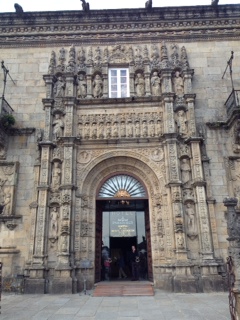
We’re splurging and staying at the Hostal de los Reyes Católicos, the famous five star parador (see photo at top of page). Paradores are a hotel network of government owned, restored historical buildings throughout Spain. This massive structure was originally a hospital built in 1499 by Queen Isabella and King Ferdinand (hence, the hotel’s name) and is said to be the oldest hotel in Europe. We explore every corner of the four courtyards, the church and the sitting areas. We read every historical sign that tells the story of each area and makes it come to life.  Our room is a lovely retreat with a feeling of Old World Spain that looks out onto one of the courtyards.

Santiago is a vibrant city with a bit of a carnival atmosphere, due in part to the large number of pilgrims descending on it each day. Streets filled with shops, restaurants and outdoor cafes twist and turn into narrow passageways that open to small plazas.

We had befriended a pilgrim couple early on in the walk and talked of sharing a celebratory dinner in Santiago in the hotel dining room. With the reservation now made, we now realize that our pilgrim clothes might not be suitable and some shopping might be in order. We laugh and wonder if we will recognize each other, all cleaned up. As we head back to the hotel, we join a group of fellow pilgrims for a celebratory drink. It’s a lovely evening enhanced by the gourmet dinner and the wonderful company. We end the evening with a toast to the continuance of our newfound friendship.

Oct. 21: Santiago

All Camino routes end at Santiago’s Cathedral where Saint James, the patron Saint of Spain, is buried. We head to the Cathedral early in order to get a seat for the noon Pilgrims’ Mass, a pilgrim tradition. We are disappointed that we are no longer able to place our hand on the column in the inner portico as a mark of gratitude for a safe arrival. After millions of pilgrims wore finger holes in the solid marble over time, the area is now covered by a protective barrier. The highlight of the Mass is the swinging of the Botafumeiro, a giant incense burner (featured in the movie “The Way”). It was originally used to fumigate the dirty and disease-ridden pilgrims. The eight attendants start pulling up and down until it swings as high as the ceiling. We lift our heads to follow it and realize it is right over our heads; a strange feeling.

Next, we head to the Pilgrims Office to obtain our Compostelo Certificate of Completion. All along the route, we have obtained stamps from hotels, restaurants, churches, etc. on our Pilgrim Passports, denoting what towns we visited. From Sarria on, we were required to obtain two stamps a day. The 45 minutes fly by as we compare notes with fellow pilgrims. We run into some pilgrims and agree that a last glass of wine together is in order. It’s hard to say goodbye…

Since I’ve arrived in Santiago I have not slept well. All the sights and sounds of the last 35 days are swirling around in my head and I am trying to sort them out. It is said that the Camino is divided into three parts. The first is physical, as your body gets used to the grueling daily regimen. The second is mental, as you walk the flat, somewhat boring paths of the meseta. The last is spiritual, as you near Santiago and the end of your long journey.

The Camino books and YouTube videos tell stories of pilgrims experiencing some sort of spiritual epiphany and I am hoping that I am one of them, but as I analyze each day and experience nothing comes to mind. I open our Camino book and start to flip through it, not sure why. We have owned this book for over a year and have referred to it many times throughout each day, but for some reason I have never turned to the last page until now. The words of a poem by Marianne Williamson (made famous by Nelson Mandela in his freedom speech) make the hair on my arms stand up on end and bring tears to my eyes. My spiritual gift was waiting for me in those last pages:

Our deepest fear is not that we are inadequate.
Our deepest fear is that we are powerful beyond measure.
It is our Light, not our darkness, that most frightens us.

We ask ourselves, who am I to be brilliant, gorgeous, talented and fabulous?
Actually, who are you not to be? You are a child of God.
Your playing small doesn’t serve the world.
There’s nothing enlightened about shrinking.
So that other people won’t feel insecure around you.

We were born to make manifest the Glory of God that is within us.
It’s not just in some of us; it’s in everyone.
And as we let our Light shine,
We consciously give other people permission to do the same.
As we are liberated from our own fear,
Our presence automatically liberates others.
photo-lm


The Camino: Sept. 23 – 26, 2016

img_0013

Sept. 23- Nájera: 18 miles, seven hours

The Harvest Festival revelers kept us up with their shouting and singing, but we still are up and ready to go.

Today’s path starts out flat through towns and then vineyards. We welcome the cooler temperature in the 60s, no sun and no steep inclines or descents.

Throughout the day the path changes from dirt to rocks to concrete. Trails flow through forests, fields, vineyards, towns and along busy and quiet roadways. The terrain dictates how long the days walk will be.

Nájera was the capital of the Navarre kingdom in the 11th century and its old stone buildings still stand proudly. We arrive at the Hostal Ciudad de Nájera and are greeted so warmly by the father and son owners as if we were family. They carry our backpacks up the stairs to our rooms and present us with a cold bottle of red wine, which we gratefully accept. All this and a bathtub too!

Sept. 24- Santo Domingo de la Calzada: 14 miles, five hours

It’s such a peaceful start to the day when you walk just before sunrise.

The flat path soon gives way to long inclines, then long descents, with lots of loose gravel, but the welcoming smiles and wishes of “Buen Camino!” from the townspeople in each little town we pass through gives us the energy we need to continue.

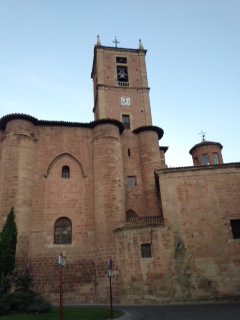
We thought we had another hour to go and are so surprised and happy to see the town sign that we celebrate with a Coke with lemon. The Hospederia Cisterciense is run by the nuns of the same name and we are impressed by its Old World charm and the simple, clean, crisp feeling of the rooms.

Sept. 25- Belorado: 14 miles, five hours

The nuns are fussing over us at breakfast, making sure we have enough to eat and wishing us “Buen Camino!.”

Most of today’s walk travels right next to the busy N-120 Highway. Cars and trucks are roaring by and the sound is anything but relaxing.

I am feeling less intimidated of the terrain and allow myself to let my mind wander just a bit, without ever losing respect for the Camino. One loose pebble underfoot is a reminder to keep focused.

Belorado is another lovely old town, centered on a plaza and a church. We are so happy when we finally find Pensione Toni. It’s a big room with 4 beds just for us, so we spread out and make ourselves comfortable.

Our feet are throbbing, as if they have a heartbeat and we are concerned. Later, when we join a New Zealander and a New Yorker for cocktails, we are relieved to know that they also have the same problem; blame it on the hard pavement.

Sept. 26- San Juan de Ortega: 15 miles, 5 and one-half hours

Today marks day No. 11; we have already completed one-third of the Camino!

The sunrise makes the fields glow and I have all I can do to stop myself from running through them singing the theme from “The Sound of Music.” Luckily, I resist, since it would have defied the No. 1 Camino rule: don’t take any extra steps that you don’t have to!

The route is flat, until we come upon some very steep inclines and descents, which luckily were very short. We pass Atapuerca, which displays the earliest human remains ever discovered in Europe. Then, we see a sign which says “Oasis Ahead.” Is that salsa music we hear in the distance?

We come across a young woman selling food and cold drinks for a donation and giving out slices of cold melon; so refreshing! Two pilgrims who do not know each other start dancing and everyone is laughing and clapping.

With a population of 18, the small town is centered around a lovely stone church. Our Hotel Rural La Hanera is very comfortable. We sit outside with a view of the church and enjoy some wine, while conversing with a couple from Iceland and a young man from New York. When the owner notices all the hungry pilgrims patiently waiting for the restaurant to open at 7 p.m., he decides to open 15 minutes earlier for us and we are all grateful.


The Camino: Sept. 19 -22, 2016

image

Sept. 19- To Puenta de la Reina: 15 miles, seven hours

On our way out of Pamplona, we walk through the beautiful park and gardens and then to the University, where they stamp our pilgrim passport.

Today, the walking is very difficult; steep inclines and descents with lots of loose, rocky terrain. We’re walking with a group from Germany and I make them laugh when I say that I will be declining a drink “on the rocks” at cocktail time.

We are so happy to have a private room at the Albergue Puenta de la Reina. We sit outside and enjoy a cold beer on their private terrace, run into our Australian friend and plan to have dinner together.

Sept. 20- To Estella: 14 miles, six hours

It’s always nice when the terrain starts out flat. As we walk, we watch a farmer plowing his fields, then stop to breathe in the wonderful smell of the rich, red earth; such a wonderful, clean smell!

We always take a rest in each small town we pass, sometimes to have a snack or just to use the facilities. In this particular place, the woman behind the counter was complaining, in Spanish, that everyone on the bathroom line should be paying something. I suggested to her, in Spanish that she put up a sign in different languages and charge a fee (marketing 101).

We are lucky to find a private room in the Capuchino Monastery tonight. No laundry service is available, so we start our laundry and then sit in the garden, enjoying a cold beer. We laugh with a German couple and agree that this isn’t a bad way to do laundry.

Sept. 21- To Los Arcos: 13 miles, six hours

I love walking through the towns early in the morning. They look like a movie set. With the old stone buildings and the town center with the church and plaza, it’s always a surprise when someone passes you in contemporary clothing or a car drives by.

First thing in the morning, we come upon the famous Fuente del Vino: a free wine spigot for pilgrims from one of the local wineries. We decline, but the Europeans make up for us!

We are in the Rioja wine country and pass through miles of vineyards. As we’re walking, we think we hear music. Around the bend, in the middle of nowhere, there is a husband and wife playing the violin and accordion for donations.

Tonight, we are staying at Pensione Los Arcos. Jose, the manager, not only welcomes us, but gives us his cell phone number in case we need anything. We enjoy discussing the day’s adventures with people from Sweden, Australia and Utah.

Sept. 22- To Logroño: 17 miles, 7 and one-half hours

The flat city pavement and the flat dirt road give us a false sense of security. While we knew to expect inclines and descents today, we are surprised to find that there were so many and that they were so steep.

I try to enjoy the beautiful vistas and keep my mind off the inevitable. The large blocks of farmland in beiges, browns and greens look like suede in the sunlight. A farmer and his dogs guide a flock of sheep on a steep parcel of land. A trail through the forest was a welcome respite from the sun.

We happen to land here on one of the biggest festival days of the year- the Harvest Festival. The plaza is teaming with people and filled with musicians and dancers. It’s so exciting to be a part of it!

Tonight, we’re staying at the Alburgue La Bilbaina. While it’s a great location and very clean, we could have done without the many old, uneven, ceramic tile steps that lead up to our room.


,