Lisbon, Portugal: Oct. 25-29, 2016  

Image


Photo Sintra 2

We surprise Mr. Wiz* and serenade him with a rendition of “Happy Birthday” in Spanish on the train to Lisbon. Known as one of the oldest cities in the world, Lisbon is the hilly, coastal, capital city of Portugal. It’s hard to believe that an earthquake and tsunami devastated it in 1755 and it had to be built anew.

After much research, Big A* and I settled on the H10 Duque de Loule Hotel. It is a little gem; an elegant boutique hotel in a historic building. The rooms are mostly white, with hints of the famous blue and white Portuguese tiles. The cozy lobby has wonderful window seats and interesting coffee table books to peruse, but the best spot in the house is the rooftop bar with a beautiful city view, our new meeting spot every night before dinner. We are offered a sparkling wine by the sparkling staff as we check in and waste no time heading out again.

This is a great walking city and we are in for more inclines and descents. We tour the gardens in the lovely Parque Eduardo VII and visit the trendy Rossio Square and the riverfront Palace Square. We take a stroll on the beach and watch the surfers. We people watch as we eat lunch at a seaside restaurant on the docks of Santo Amara. We visit Vasco da Gama’s tomb at the 16th century Mosteiro dos Jerónimos. We take the guidebook’s word that the largest collection of baroque tiles on record is at the majestic Mosteiro de São Vincente de Fora Church. We save some steps and ride the tram up the very steep route and enjoy the views of the Tagus River. At night, we listen to the hypnotic verses of the famous Fado music.

When JC* warns us to watch for the Gypsies, I am even more excited to finally see the Alfama, Lisbon’s oldest district. It’s a maze of medieval and Moorish alleys with little hidden nooks and crannies. We sit on the ledge at the 16th century Castelo da San Jorge (St. George’s Castle) and admire the breathtaking view. Armed with his New York Times 36-hour guide, Big A is determined to find a rooftop bar that he has read about it. I can’t help but laugh when he leads us to a parking garage elevator. We exit at the top floor and head to a door. We open it and wow! It’s a stunning oasis with comfortable seating, great music and amazing views of the city. We toast to feeling very cool that we found this private club.

We take a Viator day trip to visit the towns of Sintra and Cascais. There are only 7 of us in the van, including an English woman traveling alone who is the nanny to the Saudi Arabian Royal Family (a fascinating conversation follows). Our tour guide, Joaquin, is very chatty and not only shares his knowledge of the sights, but interesting information about the Portuguese economy and lifestyle.

Sintra boasts not one, but two castles that were both royal residences; very different in style, but each fascinating. The National Palace of Queluz, built in the 18th century, exudes the elegance and grandeur you would expect, with its impressive rooms and formal gardens. But, it is the Palace of Pena, built in the 19th century that has the wow factor. Set on top of a mountain in the middle of a forest, this flamboyant fairytale chateau displays its medieval and Islamic architecture proudly in bright colors.

After a stroll through Sintra’s charming hilltop town and a yummy lunch of petiscos (the Portuguese cousin of Spanish tapas), we head for Cascais, the Portugese version of New Yorks’s Hamptons. After a walk around this affluent coastal town, we are eager to sneak a peak at the lavish hotel featuring a room with the glass bottom floor, where you can watch the waves from your bed (like Brad and Angelina did when they stayed there), but Joaquin has other plans for us. It’s time for one last walk on the beach before we fall asleep in the van to the sound of Joaquin’s voice, regaling us with the continuation of his life story.

When I notice that I only have one set of vitamins left, I realize that it must be almost time to head home to… (we only moved to Texas in April, so forgive me if it takes me a minute to remember where home is). At the airport, we joke about which other flight we’d rather hop on, but after 46 days, it’s time to get back and see what trouble we can get into in Austin.


Pictured: Palace of Pena entrance.

*Who’s who? See “Cast of Characters” on the “About” page.


Laptop-less, Yet Dressed for Success; an Exercise in Positive Thinking

What’s next? I was daydreaming with the TV on. What would my next career be? Just then, I noticed a segment about a woman who had moved to Europe and started her own business. There she was, working on her laptop, outside in the town plaza and it hit me; that’s what I want to do!

I want to work on my own, just me and my laptop; no store front and no employees. I want to set my own hours and be able to work from anywhere. But, how? When? Where? I had no laptop and no vision of what I would do, but I decided that I would not let doubt creep in and ruin my excitement.

Now that I had something to focus on, I could start practicing positive thinking. I made up a mantra that I said every morning when I woke up. Every night, just before I fell asleep, I envisioned myself working outside on my laptop every day, successful and happy, noting every detail as if I were in a movie. I had set the stage and would let my subconscious take care of the rest.

One day, while flipping through the newspaper, I noticed they were advertising a blog class for beginners. That was it! I signed up for the class right away and got the last spot. Only one slight problem: it said to bring a laptop and I didn’t have one. I borrowed one for the evening, but what about going forward? The laptop was an integral part of my plan. It represented the freedom to move about. No time to be pessimistic now, I just kept practicing my positive thinking.

The class inspired me and gave me the fundamentals that I needed. I started making notes and getting excited. Even though I was not looking for any investors, I decided to take the time to write a business plan in order to map out my strategy (after all, ultimately this was to be a money-making proposition). I had never written one before, so I gathered a couple of “how to” articles and went to work. The exercise was invigorating. The fact that I still did not have a laptop and did not really want to spend the money for one right now did not deter me. I just kept on with my positive thinking.

Then, one day out of the blue, Mr. Wiz* came home from work and excitedly told me about a new sales contest that his employer had announced. Each salesperson would receive a percentage of their sales for the next two months that could be used at an upcoming auction. To further spur them on, salespeople were asked to turn in a list of items that they and their families wanted, for inclusion in the auction.

We researched laptops and Mr. Wiz turned in the information. I was counting the days until the auction. What Mr. Wiz had not told me until the evening of the event was that he had the highest sales for the time period. When I left the event that evening, new laptop under my arm, I felt as if I were in a dream. Then I realized that I was; a dream of my own making.

Since then, we retired early and moved to Austin, Texas. It took a while to get settled, but now here I am, sitting on my patio every morning, typing on my laptop and writing for my new blog. What’s next?


*Who’s who? See “Cast of Characters” on the “About” page.


Porto, Portugal: Oct. 22-25, 2016

Image

Photo Porto 2

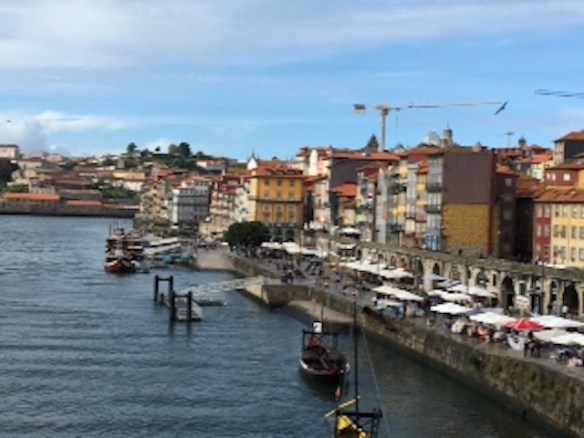
View from the Duoro riverbank

The Pilgrims do not seem to want to go home. Most are leaving Santiago and heading out in all directions. We are going to Porto by bus to meet up with JC* and Big A* and are anxious for our reunion.

Porto is one the oldest cities in Europe and a UNESCO World Heritage Site. It’s location on the Douro River and its hilly streets (more days of inclines and descents!) make it an interesting city to explore.

We travel well together. Big A and I are armed with all the research we’ve done. I especially like the New York Times 36 hour city guide that Big A has provided. Oh, and he surprises us by being able to speak just enough Portuguese to get by (says it’s very similar to Spanish, so he brushed up using the free Duo Lingo app.). Mr. Wiz* is in charge of getting us where we want to go and JC provides the spunk and enthusiasm (she is first one up and ready each day).

You can always count on the NH Hotels for a trendy vibe and the NH Collection Porto Batalha delivers. I particularly like the ancient stone arches that grace the modern lobby and the old postage stamp theme in the elevators and on the carpeting. On arrival, we are given coupons for a port wine tasting in the bar. This will be the start of a wonderful relationship between us, the bar and the port, every night after dinner.

Those inclines and descents really help us work up an appetite and we foodies can’t decide what we like the best: bacalhau (salted codfish), grilled pulpo (octopus), cabrito (baby kid), suckling pig or Portuguese sausages. One of the more interesting meals was lunch at Pastel De Bacalhau. There was only one item on the menu: a large, egg shaped codfish fritter stuffed with cheese served in a plastic holder inset into what looked like an artist’s palette with room for your glass of white port and your thumb, so you could carry it all with one hand.

We stroll the narrow cobblestone streets of the Ribeira District, the old quarter on the Duoro riverbanks, the beautiful gardens at the Palacio de Cristal and the Avenida dos Aliado, a lively avenue. We visit the Livaria Lello & Irmao Library, named the most beautiful bookstore in the world and rumored to be the inspiration for J.K. Rowling’s Harry Potter series. At the Do Porto Cathedral, we delight in the story that a local resident painted the altar to hide its silver, so that when Napoleon and his troops entered the city to pillage it, they left it behind never realizing it was there.

Before we know it, it’s time to head to Lisbon by train.

*Who’s who? See “Cast of Characters” on the “About” page.

Five Life Lessons in 500 Miles: What the Camino Taught Me

Image


Photo Cruz 2

This year, I walked 500 miles through Spain and became a Peregrino, (a pilgrim). I, like the more than 250,000 people from all over the world that are drawn there each year, walked (or biked) to the Shrine of the Apostle Saint James in northern Spain’s medieval city of Santiago de Compostela. The routes, known as “caminos” or ways, originate all over Europe. We traveled the same paths as those did thousands of years before us for the same reasons (spiritual, mental, physical) and with little change.

It is said that “the Camino provides.” One of its gifts was the simplicity of each day. As you trekked through each small town, you were reminded of the beauty of an uncomplicated life. After 33 days of being “unplugged” from the usual stimuli of our daily lives, my minds was clear and open, a freedom seldom experienced.

Whether I was enjoying the camaraderie of other pilgrims or the solitude of walking alone, my days were filled with time for sharing thoughts with others or with myself. I returned home with the unexpected souvenirs of some lessons learned and a new way to live life: 

  1. Focus on one step at a time: Rather than waking up each day and thinking of the 12 – 20 miles of inclines and descents ahead, it was important to concentrate on your footing. Likewise, giving my attention to smaller goals rather than the big picture, will keep me on track and not leave me feeling overwhelmed.
  2. Listen more: I was so captivated by the life stories of the other pilgrims that I found myself listening, really listening to what they had to say. In the quiet moments, I paid more attention to the sounds of nature. I was even more attuned to what I was thinking and feeling. Now, when I have the inclination to interrupt in order to get a word in, rush through a day or disregard myself, I will instead try to remember to savor the moment.
  3. Go with the flow: A day of torrential downpours, a missed turn, dirty clothes and a broken washer and dryer; the day’s trials were nothing that a laugh over a glass of wine with some other pilgrims couldn’t fix. I have trouble “winging it” and always prefer the flow to be pre-planned. I now realize that I need to loosen up and enjoy the ride.
  4. Be open: This was an amazing opportunity to meet people from all over the world and realize that even though they may look, speak or act differently, we basically are all the same. Rather than shying away from those that are different from I am, I will make an effort to be more receptive and try to let my curiosity lead the way to new experiences.
  5. Be grateful: Living so simply for a month, slowing down and watching the small details of life go by opened my eyes to what really matters: health, happiness, family and friends. I will remember to start each day being thankful for what I have, work at giving back in some way and try to cling to as much simplicity as I can.


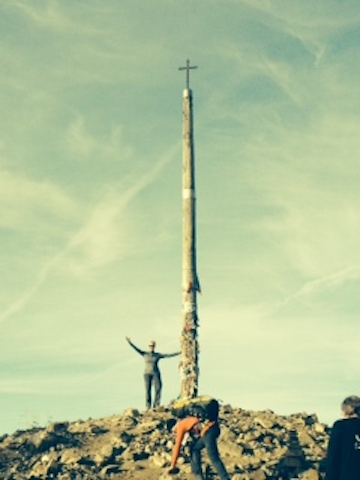
Pictured: The Cruz de Farro (Iron Cross) near Rabanal
Pilgrims bring a stone from home and carry it on their journey to symbolize the spiritual, mental and physical aspects of their lives that are weighing them down. When you leave the stone behind, it is said you are ridding yourself of these burdens.


How to Huff and Puff and Blow Your Stress Away

Contrary to popular opinion, the big bad wolf was a soft-spoken yoga enthusiast with laser sharp focus. Unfortunately, for the three little pigs, his focus was on them. Nevertheless, there is something to all that huffing and puffing. Breathing in until your nostrils stick together, then blowing the air out with all the force you can muster not only gives you a powerful feeling, it may also knock down a house made of sticks. Breathing is the essence of yoga and is believed to control your body, mind and emotions.

The American Institute of Stress suggests that instead of zoning out in front of the TV, the best way to combat the damaging effects of stress is to practice breathing deeply. It elevates your heart rate, forces your lungs to take in more oxygen and helps you to expel more carbon dioxide. In some cases, deep breathing exercises are able to be substituted for conventional medical treatment of stress-related disorders. Giving your heart a good workout cannot only change how you feel, but how you look. Keeping stress at bay can make you look and feel years younger.

Why not give it a try; what have you got to lose? The next time you have too much on your mind, something keeps nagging at you, you don’t get enough sleep or you can’t seem to focus- try huffing and puffing. You will feel an instant release. Plan to work it into your daily schedule for a few minutes a day with a goal of 15 minutes. No time? Try multi tasking; I like to do it while I am exercising.

Deep breathing is effective for any age, it’s free and you can practice it anywhere. Since the way you breathe affects your whole body, it’s a formidable way to change your life. Who knows? Had the three little pigs taken the time to clear away their mental cobwebs and de-stress, would they have been back in the real estate market researching mortgage options?


The Camino: Sept. 16 – Oct. 20, 2016 -Reflecting On Our Journey

Image

Photo Recap 2

 Accommodations Price Range: $10 – $90 (excluding Santiago).

Bedbugs: None! Daily ritual of mattress checking after stripping bed paid off.

Budget: 100 euros for two, per day ($116).

Conveniences Missed: Drying clothes in a dryer rather than hanging them on a line, Wi-Fi that works, toilet tissue in restrooms.

Clothing: 2- pants that unzip into shorts, 2- short sleeved tops, 1- long sleeved top, 1- leggings for evening, 1- top for evening, 1- fleece, 1- rain jacket, 1-hat, 1- buff, 1 nightshirt, 3- pairs of socks, quick dry underwear and sports bras, 1- pair flip flops and sneakers.

Dinner Price Range: $10 – $15 per person for a 3-course dinner with water, bread and a bottle of wine.

Emotions: Feeling more grateful, tolerant, peaceful and adventurous.

Equipment Favorites: Buff: a colorful, stretchable, jersey headband that can be worn as a scarf, hood, sleeping mask, wrist band, mask, etc.; Hiking Boots: Merrell MOAB Ventilator Mid: just noticed it says “Outperform” on the box and outperform they did!: Hiking poles: could not have successfully walked without them.

Food Favorites: Caldo Gallego- soup made with potatoes, white beans, turnip greens, ham and chorizo (Spanish sausage), Arroz Negro- seafood and black rice flavored with squid ink, tortilla- potato and egg pie.

Foods That Won’t Be Missed: Bread and french fries.

Friendships: It’s not always the case that 4 people just “click.” We connected with a couple from Utah. A new, budding friendship would be the best trip souvenir we could ask for.

Hiking Days: 33.

Longest Walk, Distance:  Day 22- 20 miles to Astorga.

Longest Walk, Time: Day 1- nine hours over the Pyrenees.

Makeup Meltdowns: Blamed it on the passenger sitting next to me on the flight that looked like a model out of Vogue magazine; felt naked, not myself. Once the Camino started, I began to feel more comfortable in my own skin and think less about me and more about the details of the daily experience. Also, great to be able to get ready so quickly each morning!

Miles Walked: 501.

Missing the Most: The camaraderie, the solitude, the simplicity of our daily routine, the feeling of accomplishment after a physically challenging day.

Pilgrims Met, Around the World: 22 countries.

Pilgrims Met, United States: 27 states.

Public Transportation: None for us, but taxis, buses and trains were available if the going got too tough.

Spousal Arguments/Disagreements: None! We were together 24/7 for 35 days. Our physical and emotional levels were as high and low as the inclines and descents we’d climb each day, but sharing this experience, taking care of each other and working together to accomplish our goal has brought us even closer (if that’s possible) and has given us a newfound respect for each other. Dare I say it?  I think we may have fallen in love all over again.

Rest Days: 2.

TV, Radio: None!

Weather: 45 degrees (early morning) – 85 degrees.

Woods Bathroom Breaks: 2- tried to keep to a minimum.


The Camino: Oct. 17 – 21, 2016

                                                 photo-parador

Oct. 17- Palas de Rey: 16 miles, six hours

The path is nothing but mud and it’s drizzling. I’m sweating in my rain jacket and trudging along. A fellow pilgrim, a lovely older woman traveling alone catches up to me and with a sparkle in her eyes, says “What a beautiful morning! I love the mist. It changes the entire perspective of the landscape.” As I’m listening to her, I unzip my jacket, pull down my hood and the light drizzle instantly cools me off. By the time she goes on her way, I’m feeling great and the rain has already stopped.

We’re up and down again, walking right through farms and past lovely old stone farm houses, catching a glimpse of daily life: an old woman humming to herself as she hangs laundry; a farmer out in the pasture tending his sheep; a woman picking raspberries who stops to offer us some; the cows lazily grazing in the fields; the dogs sleeping in the sun. I find I have acquired a new skill and though it may not be resumé material, it’s interesting to note: I am now able to differentiate an animal’s manure by its smell.

I laugh to myself as I coin a new phrase: “In Spain, what goes up, must come UP”! Walking in the forest always seems a bit mystical, especially the way the light plays on and around the trees, lined up in exact rows. The scent of the eucalyptus trees is even stronger when we crush some leaves in our hands.

The outside tables are still wet in the little taverna when we stop for a cold drink. A fellow pilgrim is wiping off his table with a rag from the owner and when he sees us, he wipes off ours too. I pass on the kindness by wiping the table for some other pilgrims that sit at the next table. It’s a small gesture, but speaks to the feeling of community.

The Pensión Palas is simple, modern and clean, but the town seems old and rundown. The big excitement of the evening is that I am served rice with my dinner, rather than the ever-present french fries.

Oct. 18- Castañeda: 13 and one-half miles, six and one-half hours

The temperature is in the high 60s and cloudy; perfect walking weather. We’re up and down, through forests, farmlands and towns. It seems it will be a fairly uneventful day until we come to a river. The bridge is made up of boulders covered in mud. I take a minute to access the route and see I have no choice. I feel more confident with my poles, until I realize that the last two boulders narrow and the poles won’t fit. I panic for a second, but tell myself I have to keep moving forward; other pilgrims are behind me and there’s nowhere else to go. It takes all I’ve got in me to slowly make my way to the end. I’m amazed at my newfound grit and it gives me a spring in my step.

Casa Garea, our Casa Rural for the evening, is located at the beginning of town on the main road. The shoulder is narrow on the road and the cars are zooming by at breakneck speeds. Our only option is to walk through a big field. Our boots are sinking into the fresh dirt, making the walking more difficult. On arrival, the owner greets us and asks if we enjoyed the walk through the forest. We realize that we were too quick to get off the pilgrim path; a few kilometers ahead there was a sign that would have led us right to our destination. Lesson learned: always refer to our map.me app. (which requires no internet connection), especially when tired.

The room is cozy with wooden beams on the ceiling and white, starched linen curtains on the windows. After we freshen up, the owner brings in some wood for the fireplace and we sit in the downstairs sitting room with a glass of wine and relax. It’s not that cold out, but the warmth of the fire feels good. We make sure not to fall asleep and miss dinner.

Oct. 19- Pedrouzo: 16 miles, 6 and one-half hours

I spend my morning saying a prayer for each of the pilgrims that we pass that are not well but keep plodding along: five limping; three with food poisoning; and one with an intestinal virus. I am humbled by their strength and determination and feel a bit guilty that I have made it to this point unscathed; me, with the weak stomach, who always thought of myself as clumsy. I want to hug them and tell them how much I admire them, but each of them seems to be in a type of meditative state, some even wincing with every step. “Buen Camino,” the usual greeting, does not seem appropriate. All I can think of is to give them a thumbs-up as I pass them by.

Pensión LO is brand-new, all white and very modern, but the room has one design flaw: there are no shelves or closets! We balance what we’ll need for the evening on our backpacks and hope for the best. There’s lots of traffic in this town, but it looks a bit old and bleak, so we head back to the Camino path to find a restaurant for dinner. After some hugs and catching up, a friend we run into suggests the place she’d just dined at. It’s very contemporary, with a wooden communal table in the middle and shelves lined with gourmet foods; it looks so out of place. The food is good and the service is slow, but the wine is served right away and we are entertained by a mother and her 15-year old precocious son from Finland traveling the Camino together.

Oct. 20- Santiago: 13 miles, five hours

It feels like Christmas morning! We’re up early and excited to get going, but the sun has yet to rise. It’s still dark when we head out, but we only need the flashlight for a few minutes. The path takes us through some suburban towns, past the airport and alongside some roads, with just enough inclines and descents to make us realize that just because it’s our last day of walking does not mean it will be an easy one.

All that’s separating us from entering Santiago is a bridge. As we draw closer, we notice that it’s an old, depilated, wooden bridge with missing, uneven slats. The guard rails are unusually low, so as the traffic speeds by both beside us and below us, it gives us the sensation of Vertigo. We try to focus on walking exactly down the middle, keep our heads down and watch every step we take as quickly as we can.

We’re standing in front of the Santiago city sign, but after what it took to get here, it seems like a bit of a lackluster greeting. Besides the sign to welcome us, there is a gas station and a row of restaurants. It takes another hour to get to the old section of the city. Just when we feel our energy waning, some local residents assure us we are almost there and give us a thumbs-up.

As we approach, we hear the faint sound of bagpipes. There’s a musician dressed in a cloak and a feathered hat playing in the tunnel. As we exit the tunnel, the Cathedral comes into full view, sparkling in the sunlight. Now that’s the dramatic welcome we were hoping for!

We hug longer than usual and both get teary eyed. Amongst the tourists who quite don’t know what to make of this, the Plaza de Obradoiro (known as the “golden square”) is full of pilgrims hugging, chatting, taking group photos, sitting cross legged in groups or just laying down on the ground in the sun around the Cathedral.

It’s time for lunch and we agree that some wine might be necessary to celebrate and to help us to sort out our emotions. We’re so grateful for a safe journey and not sure how we feel. Are we elated to have arrived or melancholy that it’s over?

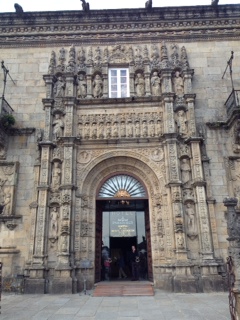
We’re splurging and staying at the Hostal de los Reyes Católicos, the famous five star parador (see photo at top of page). Paradores are a hotel network of government owned, restored historical buildings throughout Spain. This massive structure was originally a hospital built in 1499 by Queen Isabella and King Ferdinand (hence, the hotel’s name) and is said to be the oldest hotel in Europe. We explore every corner of the four courtyards, the church and the sitting areas. We read every historical sign that tells the story of each area and makes it come to life.  Our room is a lovely retreat with a feeling of Old World Spain that looks out onto one of the courtyards.

Santiago is a vibrant city with a bit of a carnival atmosphere, due in part to the large number of pilgrims descending on it each day. Streets filled with shops, restaurants and outdoor cafes twist and turn into narrow passageways that open to small plazas.

We had befriended a pilgrim couple early on in the walk and talked of sharing a celebratory dinner in Santiago in the hotel dining room. With the reservation now made, we now realize that our pilgrim clothes might not be suitable and some shopping might be in order. We laugh and wonder if we will recognize each other, all cleaned up. As we head back to the hotel, we join a group of fellow pilgrims for a celebratory drink. It’s a lovely evening enhanced by the gourmet dinner and the wonderful company. We end the evening with a toast to the continuance of our newfound friendship.

Oct. 21: Santiago

All Camino routes end at Santiago’s Cathedral where Saint James, the patron Saint of Spain, is buried. We head to the Cathedral early in order to get a seat for the noon Pilgrims’ Mass, a pilgrim tradition. We are disappointed that we are no longer able to place our hand on the column in the inner portico as a mark of gratitude for a safe arrival. After millions of pilgrims wore finger holes in the solid marble over time, the area is now covered by a protective barrier. The highlight of the Mass is the swinging of the Botafumeiro, a giant incense burner (featured in the movie “The Way”). It was originally used to fumigate the dirty and disease-ridden pilgrims. The eight attendants start pulling up and down until it swings as high as the ceiling. We lift our heads to follow it and realize it is right over our heads; a strange feeling.

Next, we head to the Pilgrims Office to obtain our Compostelo Certificate of Completion. All along the route, we have obtained stamps from hotels, restaurants, churches, etc. on our Pilgrim Passports, denoting what towns we visited. From Sarria on, we were required to obtain two stamps a day. The 45 minutes fly by as we compare notes with fellow pilgrims. We run into some pilgrims and agree that a last glass of wine together is in order. It’s hard to say goodbye…

Since I’ve arrived in Santiago I have not slept well. All the sights and sounds of the last 35 days are swirling around in my head and I am trying to sort them out. It is said that the Camino is divided into three parts. The first is physical, as your body gets used to the grueling daily regimen. The second is mental, as you walk the flat, somewhat boring paths of the meseta. The last is spiritual, as you near Santiago and the end of your long journey.

The Camino books and YouTube videos tell stories of pilgrims experiencing some sort of spiritual epiphany and I am hoping that I am one of them, but as I analyze each day and experience nothing comes to mind. I open our Camino book and start to flip through it, not sure why. We have owned this book for over a year and have referred to it many times throughout each day, but for some reason I have never turned to the last page until now. The words of a poem by Marianne Williamson (made famous by Nelson Mandela in his freedom speech) make the hair on my arms stand up on end and bring tears to my eyes. My spiritual gift was waiting for me in those last pages:

Our deepest fear is not that we are inadequate.
Our deepest fear is that we are powerful beyond measure.
It is our Light, not our darkness, that most frightens us.

We ask ourselves, who am I to be brilliant, gorgeous, talented and fabulous?
Actually, who are you not to be? You are a child of God.
Your playing small doesn’t serve the world.
There’s nothing enlightened about shrinking.
So that other people won’t feel insecure around you.

We were born to make manifest the Glory of God that is within us.
It’s not just in some of us; it’s in everyone.
And as we let our Light shine,
We consciously give other people permission to do the same.
As we are liberated from our own fear,
Our presence automatically liberates others.
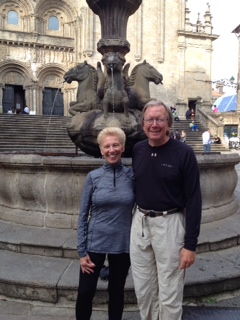
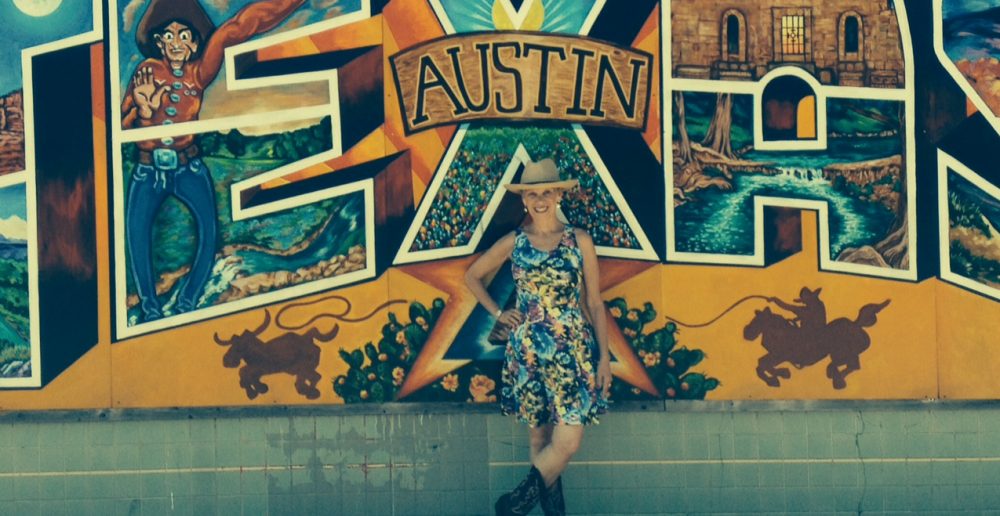
photo-lm


The Camino: Oct. 13 – 16, 2016

IMG_0257.JPG

Oct. 13- O’Cebreiro: 18 miles, seven hours

The tunnel is dimly lit as the traffic zooms by. We start out a bit groggy, but soon we’re wide-awake, as we focus on making our way on the narrow pedestrian walkway.

The flat path soon gives way to the steep, rocky inclines of the mountains. Every time you think you can’t get any higher, another incline awaits you! The views are just as spectacular as yesterday, but there are verdant patches of farmland and, once in a while, you spot a little town nestled in the hills. By today’s end we’ll have walked 2100 feet, straight up!

We are now in the province of Galicia, known for their abrupt changes in weather, rain and thick mountain fog. When dark clouds come into view and the air starts to get colder, we high-tail it and quicken our pace.

As soon as we check into Casa Valiña, a lovely rustic Casa Rural, the downpour begins. Once we freshen up and are ready to explore the town we realize that if we bring umbrellas and wear our sneakers they will not dry by morning, so we opt for rain jackets and flip flops instead.

We make sure to visit the church that houses the final resting place of Don Elias Valiña Sanpedro, the parish priest who restored the Camino and was responsible for marking the route with the yellow arrows (see photo above). It’s hard to believe you could make this journey without them.

Our Australian friend tells us a harrowing tale over dinner. He was up in the mountains alone when the rain and fog rolled in. From one moment to the next he could not see the path at all, was lucky to come across an albergue, and asked them to call him a taxi.

Oct. 14- Triacastela: 13 miles, five hours

It’s just before sunrise and ahead of us on the road I hear someone singing a song my grandmother used to sing to me in Spanish when I was a little girl. I catch up to the women and tell them in Spanish that I cannot remember the words. They reteach me the song and the four of us are singing at the top of our lungs. It’s a wonderful way to start the day!

Traffic jam: just when we are about to turn a corner, we are surprised to see a herd of cows on the Camino, followed by barking dogs and a Señora yelling at the dogs and the cows.

We arrive at Pension Albergue Lemos, which is very new and modern, with a lovely big terrace on our floor.

Oct. 15- Sarria: 12 miles, four hours

It’s dark and drizzly this morning, but in less than an hour we are walking with our jackets off.

Sarria is the town where you can start the Camino, walk to Santiago and still receive a Compostelo (certificate). From now on, the path will be more crowded. We laugh that we can tell the “newbies” because their shoes are so clean.

Our hotel, Pensión Albergue Puente Ribiera, is the first one in the town and from the sitting room we can see the bridge and the Camino route.

Everyone does the Camino their own way. Accommodations at the low end range from a straw mat on a church floor (for a donation) to a bunk bed in an albergue (a Pilgrim hostel). From there, choices include a star rated pensión, hostel, Casa Rural (a B&B) or a hotel.

We followed our savvy Australian friend who recommended a group of new albergues for the first few nights. It was an interesting experience and one that we needed to try. Those traveling alone will tell you that it’s the best way to meet people.

We soon realized that we could stay on our planned budget and upgrade our accommodations. While some like the adventure of not planning ahead as to where they will wind up each night, we were more comfortable with planning every day’s route and reserving ahead.

Oct. 16- Portomarín: 14 miles, 5 and one-half hours

We decide to get going earlier this morning and have breakfast on the road. It’s so dark (sunrise isn’t until 8:50 a.m.). We’re holding a flashlight and can hardly see where we are walking; not smart. We tell ourselves not to do this again.

I started laughing at the Camino obstacle course. Between the cow pies, mud, chestnuts (look like small lime green nerf balls before they are harvested) and the man on horseback coming toward us, you can’t lose your focus.

We stop and ask hotel directions at a small grocery store and they ask the grandmother to escort us. It’s a long walk and I feel obligated to make conversation in Spanish. When we arrive, she sweetly kisses us on both cheeks and wishes us “Buen Camino.”

Later, we see her again at the restaurant where we have dinner. We finally realize that she is the matriarch of the family that owns our hotel, the grocery store and restaurant. We ask her to take a photo with us and she is delighted.

Our hotel, El Padrino, is in the theme of the movie “The Godfather.” We are in the Don Vito room and it’s very high style, all in black, white and gray. At first, it seems so out of place, but we relax and welcome its uniqueness and comfort.


The Camino: Oct. 9 – 12, 2016

Photo Camino 10-9 to 10-12

Oct. 9- Astorga: 20 miles, six and one-half hours

The walk seems unusually long, but swapping stories with our friends from Utah and New Hampshire makes the day fly by.

Tradition dictates that it is “your Camino.” You walk at your own pace, stop at different towns along the way and decide if/when a rest day is necessary. When you run into someone you haven’t seen in a while, you are so happy to reconnect and it usually results in lots of hugs and a celebratory glass of wine. There is such a wonderful feeling of camaraderie, but it’s all in the moment. You can have an intensely personal conversation with someone, then never see them again. It is said that the Camino provides; what you need may magically appear and a stranger’s words may be just what you were searching for all along.

We follow the signs to the old city and finally find our hotel called Descansa Wendy. It’s a lovely guesthouse. The table is already set for breakfast in the sun room with blue and white china on a white linen tablecloth and the menu sounds delicious. What a lovely treat!

We run into our California friend on the street and she joins us for dinner.

Oct. 10- Rabanal del Camino: 13 miles, 4 and one-half hours

It’s cold this morning, 45 degrees, but once the sun comes up, we take off our jackets.

We run into a big group that we know, including some from Australia that we had lost track of. We all stop to see a lovely church and then around the next corner are surprised to see a man dressed in medieval costume with his pet hawk (photo opportunity for a donation),

Our hotel, La Posada Gaspar, is a renovated 17th century pilgrim hostel that exudes rustic charm. There is no laundry service, so we wash our clothes and hang them on the provided line on our terrace.

Oct. 11- Molinaseca: 17 miles, seven hours

By day’s end, we will have walked to the highest point: 4,600 feet! The combination of shale, boulders, loose rock and ravines made this one of the hardest walks, but the scenery is breathtaking. It is so silent and so still in the mountains. When the path narrowed to single file, everyone stopped talking; maybe in deference to the surroundings?

The Camino continued uphill and it seems to last forever. Finally, we see a town in the distance and a medieval bridge. Our hotel, Hostel el Palacio, is housed in an old stone building. Large groups are already sitting outside in the sun enjoying a glass of beer or wine. We join them and toast that the day was a success.

Oct. 12- Villafranca del Bierzo: 19 miles, seven hours

We start the day stressed. We decide to walk through town, but it is not well marked. We’re losing time, stopping to constantly check the map.

We’re walking through the town of Cacabelos and I stop to admire a lovely courtyard. A woman on the street says that it is a restaurant whose tradition it is to serve pilgrims a glass of wine. She insists we follow her and introduces us. We thank her and she gives me a hug. We sit in the courtyard, enjoy the wine and listen to the live music.

Once again, our hotel is at the end of town (more of a trip now, but less tomorrow morning). We ring the bell at the Casa Leo B&B, but no one answers. Frustrated, we head back to town and ask in a bar if they will call for us.

We head back once again and this time Señora answers the door right away, apologizes and escorts us upstairs. We feel as if we are staying with our grandmother. We have the whole living room to ourselves. There are only Spanish TV stations. It’s a good way to practice the language and we decide to sit and relax for a while, until we hear the big news : there are rainstorms and floods all over Spain.


The Camino: Oct. 5 – 8, 2016

img_0246

Oct. 5- Mansilla de Los Mulas: 17 miles, five hours

Watching your every step hour after hour on the Roman Road is exhausting, so I entertain myself by thinking about the people that walked this same route thousands of years ago. Later in the day, we’re back on the Senda. This is my kind of path: dirt, flat and divided in half by scrub brush.

We arrive at La Pensión de Blanca and settle in. On the street, we strike up a conversation with pilgrims from Washington state, then are happy to see some familiar faces from a few towns back. We have a glass of wine together and swap stories of our latest travels.

One young woman is traveling with her service dog and tells the story of how her dog is able to sense some ailments in people by scent. The dog kept walking with an older Pilgrim that day, though she insisted she was fine. Luckily, they were staying at the same albergue. When they arrived, the woman passed out from low blood sugar. The dog knew!

Oct. 6- León: 12 miles, four hours

This is not the scenic route. We’re walking single file close to the road through an industrial park. Once we are in the city outskirts, we are greeted by the municipal police, who give us a map and point us in the right direction.

Our hotel, Hostel Casca Antigua is in the heart of the old city and features Roman ruins in its basement, under glass. Our terrace is a great place to people watch.

León is known as one of the loveliest cities in Spain. This lively ancient city is known for its 13th century Gothic Cathedral and its tapas scene (buy a small beer, enjoy free tapas, then move on). We are excited to be here for the Fiesta de San Frolián, the city’s patron Saint. There is a medieval market with vendors in costume, processions and dancing.

We find a lovely restaurant for dinner. We are the only ones there when they open at 8:30 p.m., but when we leave at 10 p.m., the place is packed. Spaniards start work late, take a siesta for a couple of hours in the middle of the day, return to work and then continue with their evening. Everyone stays up late, even on a “school night.”

Oct. 7- León: Rest Day!

We start our day at the Cathedral (pictured above). To me, this is more impressive than the Burgos Cathedral. Headsets explain every detail: the building was built in the 13th century over Roman baths. The poor quality of the stone left the building unstable. In the late 19th century, a massive renovation began that took 50 years!

We visit the Convento de San Marcos, the sumptuous parador that was featured in the movie “The Way.” We read all about the building’s history, as we visit the Cloisters. The parador was once a monastery, a prison and a horse farm. It was in such disrepair that it was slated to be torn down, if not for the Leòn residents.

We opt for a late lunch, rather than another late-night dinner and decide that we need a nap after enjoying a bottle of wine.

Oct. 8- Villar de Mazarife: 13 and one-half miles, four hours

It was an easy day. We walked through city streets and an industrial area.

Meson Albergue Tio Pepe has recently been renovated (love the wood smell), but we soon realize that that there is no insulation between the ceiling and the floor, so every time there is movement above us, the floor screeches like a haunted house!

We think there is not much going on, until we’re told of a museum run by a local older gentleman. He lives in an old wooden structure and every corner houses a collection: telephones, farm implements, shells, etc. which he proudly displays so neatly.

Then, a young pilgrim priest tells us that he will be saying Mass at the local church at 6 p.m. and invites us all to attend. The Mass is dedicated to the pilgrims and it’s a very special experience.