
Nov. 3 – 4: A Coruña
Rather than continue as pilgrims, we’ve decided to become tourists for the last part of the trip. That doesn’t preclude us from walking across town to the Santiago train station to catch our train to A Coruña.
I’m not the best one to ask about scenic train rides. No sooner do I find my seat than, with heavy eyelids, I am lulled to sleep by the train’s soothing rocking. My usual “That was a quick trip” comment always makes Mr. Wiz laugh, but this time in less than one hour, we’ve arrived.
As we walk to our hotel, I am reminded of how much I love Sundays in Spain. Families are out in masse, on their paseo – a leisurely stroll through city streets. The well-dressed, multi-generational groups stop along the way for a meal or a drink and some tapas. As they wait for the streetlight to change, an elderly man and his son clasp hands, as long as they can, before the son must let go and cross with his family. Three women of different generations walk, arm in arm, talking and laughing together. The lively chatter and the children’s giggles somehow brighten the already sun-drenched day.
The Hotel Galeria Coruña is in the center of the historic district, surrounded by shops and restaurants. Even though its medieval stone streets are busy, no traffic is allowed, and it gives the area a relaxed feel. The boutique hotel is modern and trendy, with its white décor, back-lit shelves, and bathroom fog mirrors in each room.
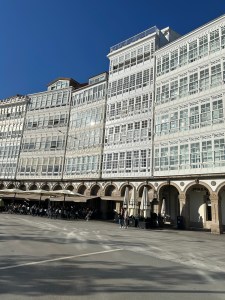
On the Avenida de Marina, the long seafront promenade is lined with bars and restaurants, all with outdoor seating that offer magnificent views of the Atlantic Ocean. The series of large, glazed white apartment buildings, with their enclosed glass balconies, line the Avenida and add elegance to the “Glass City,” the name A Coruña is known by.
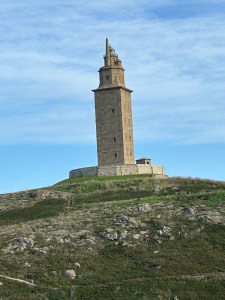
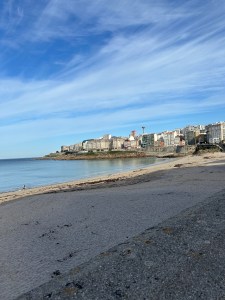
We head out on the promenade to the Tower of Hercules, the oldest working lighthouse in the world, built in the late first century and a UNESCO World Heritage Site. We take our time in the lovely sculpture garden and enjoy a walk on the beach.
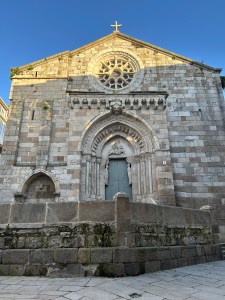
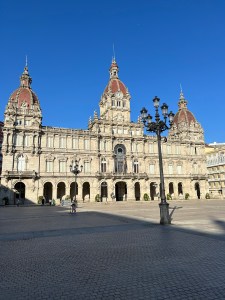
Interspersed with a glass of wine and some people-watching on the promenade, we explored the 12th-century Santiago Church and visited the Picasso Route, viewing the places where Pablo Picasso spent time while living here. We strolled the Plaza de Maria Pita, which pays homage to the A Coruña Mayor and heroine who helped defend Spain against the English Armada in 1589 – first picture above.
Discovering something interesting around every nook and cranny gives us quite an appetite and we both stop short at the sight of a group, sitting outside and eating grilled beef served on a wooden platter. Usually, we are vegetarians – or should I say flexitarians, since we do occasionally eat meat. Today is one of those days we can’t help but venture in.
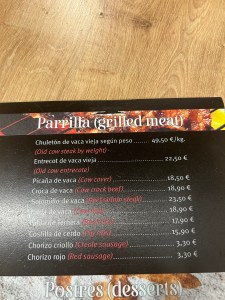
It’s 3 p.m. and this will be our main meal of the day. Otherwise, we will need to wait until 8:30 p.m. The Padron peppers and the “Pulpo“(octopus) appetizers are delicious, but when it comes to deciphering the meat side of the menu, we are stymied by words that are not translatable. If we weren’t so hungry, this would be quite funny. We resort to the good old reliable strategy of pointing to what someone else is eating. We enjoy every morsel and toast to following our intuition, especially when it’s combined with the scent of grilled meat, and getting to know in A Coruña.
Nov. 5 – 6: Ferrol
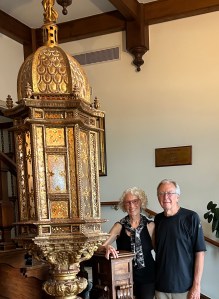
It’s a short bus ride to Ferrol and we arrive in under an hour. As we walk into town and head to our hotel, we know now why Ferrol, is known in the Galician region as their “Black Sheep.” It is not an attractive city, but the more we get to know it, the more we find there is also some charm left over from its heyday.
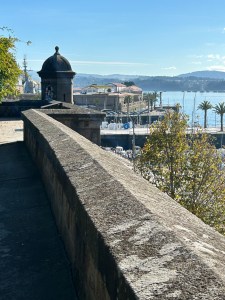
Originally a fishing village, their secure harbor, protected from the sea by rocky hills, was responsible for developing the city into a naval base, a shipbuilding center, and the Royal Navy Arsenal. At one time, the city prospered as Spain’s maritime capital, but as the Navy fleet was transferred elsewhere, the lower military presence led to a downturn in the population and the economy. This accounts for the remnants of its “Golden Age’ in the shopping district, where one out of 10 of the elegant high-end stores remain, secluded around those shops that are now for lease.
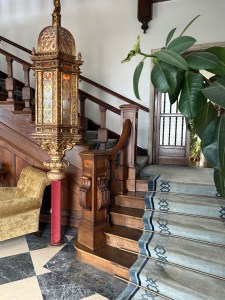

Our hotel, the Parador de Ferrol stands out as a majestic example of a genteel time gone by. The stately Galician mansion, built in 1928, features a grand staircase, nautical antiques, and lovely guest rooms with views of the port.
What is a Parador?
Paradors are luxury hotels owned and run by the Spanish government. Usually converted historic buildings, monasteries, and castles, they must meet strict criteria and maintain a high standard of quality.
On this trip to Spain, I had noticed even more than past years, the decrepit state of the buildings in the small towns and wondered why the townspeople did not get together and work to do something to elevate their hometown. It wasn’t until I arrived in Ferrol that I received the answer I had been looking for.
In chatting with the hotel front desk personnel, they mentioned that the large signs displayed throughout Ferrol’s historic district announce a complete renovation is underway, restoring the area to its original splendor. Unfortunately, due to mismanagement and delays with restoration paperwork approvals, the entire district remains in ruins. Since they are protected buildings, nothing can be touched without the proper state approvals.
With a heavy heart for the frustrated residents, we continue to seek out and find wonderful spots around town. The “Jardines de Herrera” is a lovely garden owned by the military. The Magdalena district, with its upscale homes, is the sight of two cathedrals and one special restaurant.
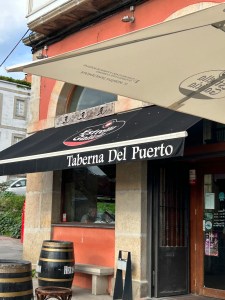
As we stroll by the water, we snag the last outdoor table at Taberna del Puerto for a late lunch. Sliced Heirloom tomatoes with extra-virgin olive oil, grilled Padron peppers, pork served with a savory/sweet sauce accompanied with French fries was one of those meals that you later dream about! So much so that when the server offered dessert, we ordered more Heirloom tomatoes!
Nov. 7 – 8: Santiago

We are warmly welcomed back to the Hotel Rua Villar, and we thank them again for holding some of our belongings, so we could travel lighter. The lovely room they have reserved for us has a wood beamed ceiling, a bathtub, and a glass enclosed sitting area that overlooks the plaza. I can see myself enjoying some writing time there, but not for too long, since Santiago awaits us.
We set out for a stroll and hear impromptu applause as we near the Cathedral Plaza. A young Korean pilgrim is on his knees proposing to his girlfriend, who has just accepted. What a lovely way to start our day!

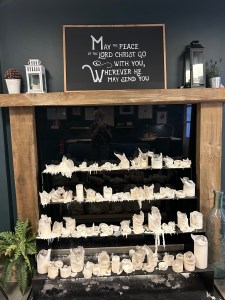
We’ve never taken the time to stop at the Pilgrim House Welcome Center and decide to do so today. Opened in 2014, it provides support and resources to pilgrims having just completed the Camino. The space consists of a living room, kitchenette, quiet reflection room and a patio.
They offer the following services (some with a small, suggested donation):
– free Wi-Fi
– computer access
– laundry service
– backpack storage
– boarding pass printing
– group or private Camino debriefing session
We didn’t plan on spending so much time there, but we strike up a conversation with the kind, soft-spoken manager and enjoy hearing about her life. After walking the Camino 17 years ago, she and her husband moved to Spain. Both had backgrounds in the nonprofit sector and were hired to develop the center, which took years of paperwork.
Now with four children, they are planning to move back to the U.S. We were surprised to hear that Santiago has some of the worst weather in Spain, with rain most of the winter. We chatted about their current lifestyle, how the family will experience culture shock when they move to Maryland, and wished them all the best.
After enjoying some Caldo Gallego, pork, and potatoes at a local’s restaurant, we decide our last evening calls for a nightcap at our favorite bar. Our walk is longer than we expected, as we travel the maze of Old Town streets, but they are filled with people eating, drinking, laughing, and talking as if it were a special celebration. This is Santiago every night!
We decline the free tapas we are offered by the bartender, so he brings us some corn nuts. The roasted snack has accompanied us throughout our walk, and we laugh to think they may, very well, also be the secret to a successful relationship. They are so incredibly crunchy that they drown out sound for the few seconds you are chewing. There are many situations when this comes in very handy!

Where to next?


 A Moxie Girl